Mission Application Framework design

Improving usability for a scalable design system  

UX Research / Interaction Design / Design System
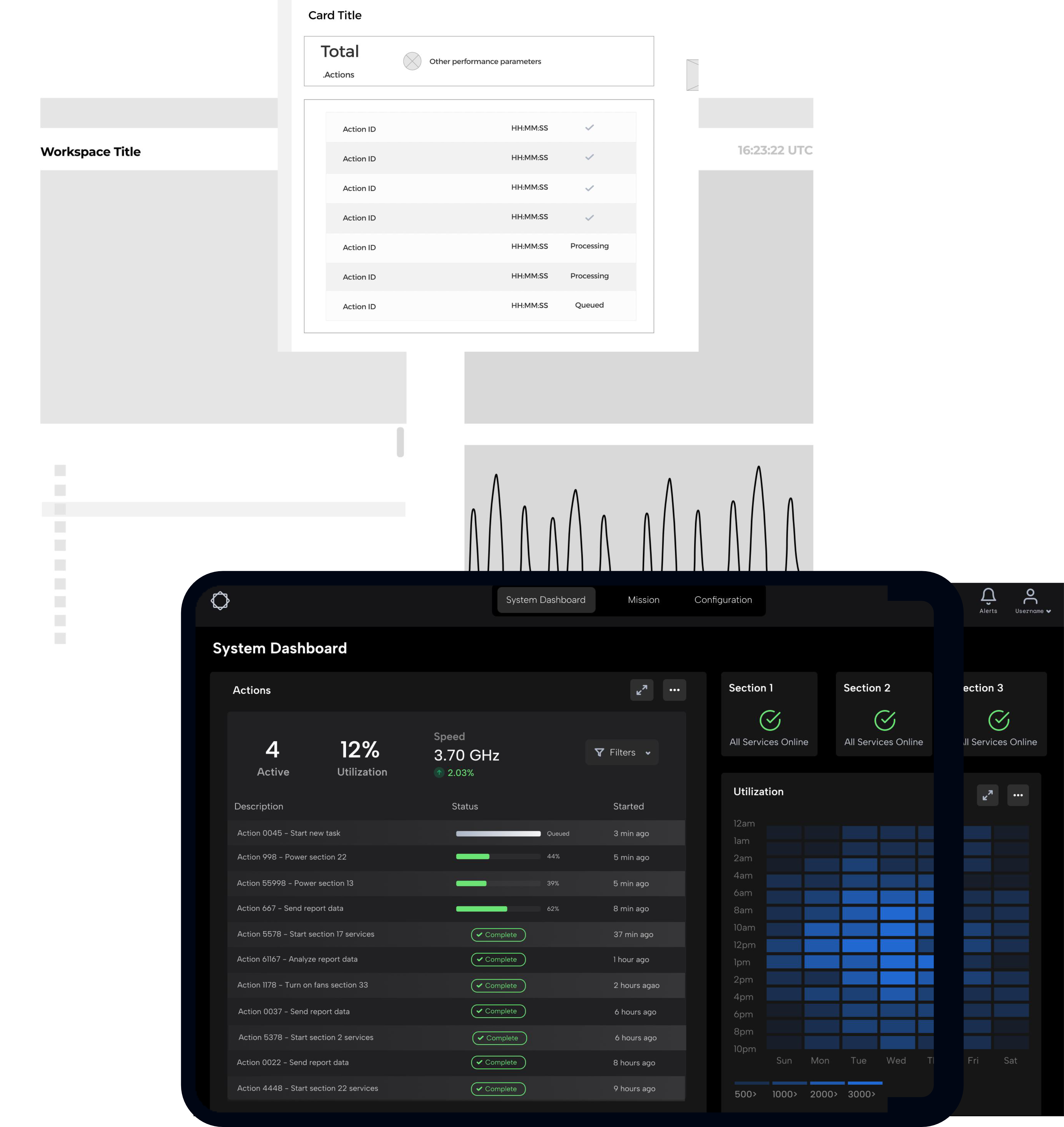
This project involved designing a scalable application framework that functioned like a Squarespace-style platform for high-stakes defense systems, giving operators a consistent, integrated environment to configure and control mission-critical workflows across a multi-year Agile development program.
Project Duration: 2 years (2022 - 2024)
My Role: UX Lead
My Role
  • Managed approach for UX research and interaction design to prioritize safety and efficiency for operators
  • Established usability analysis process for software prototypes within business area
  • Collaborated with systems and software engineering teams to define requirements and present integration progress to government customer
  • Defined and documented common styles and best practices as a design system for current and future development teams within Confluence
The Problem
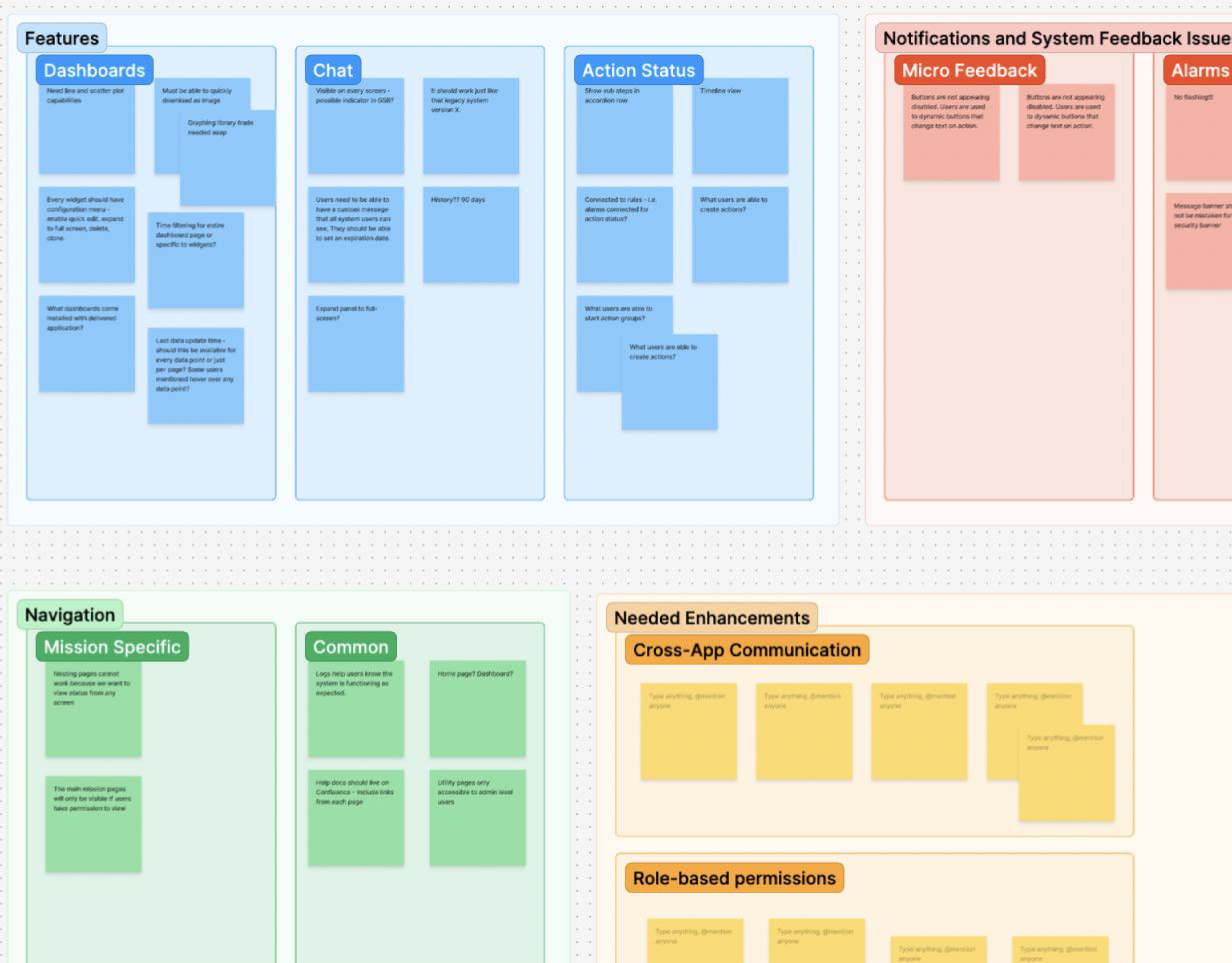
Legacy collection of applications resulting in disjointed data and inconsistent status and alert display patterns
  • Our Approach
  • Prioritized UX work on critical mission tasks for measurable reduction in time on task
  • Conducted user interviews and cognitive walkthroughs with end-users to explore and document workflow issues
Conflicting leadership approach to technical solutions reduced UX timeline to conduct appropriate research
  • Our Approach
  • Built relationships with legacy and current stakeholders to advocate for UX involvement that resulted in a more user-centered approach
  • Introduced usability testing method using internal subject matter experts and simple interactive prototypes to prevent software re-work cycles.
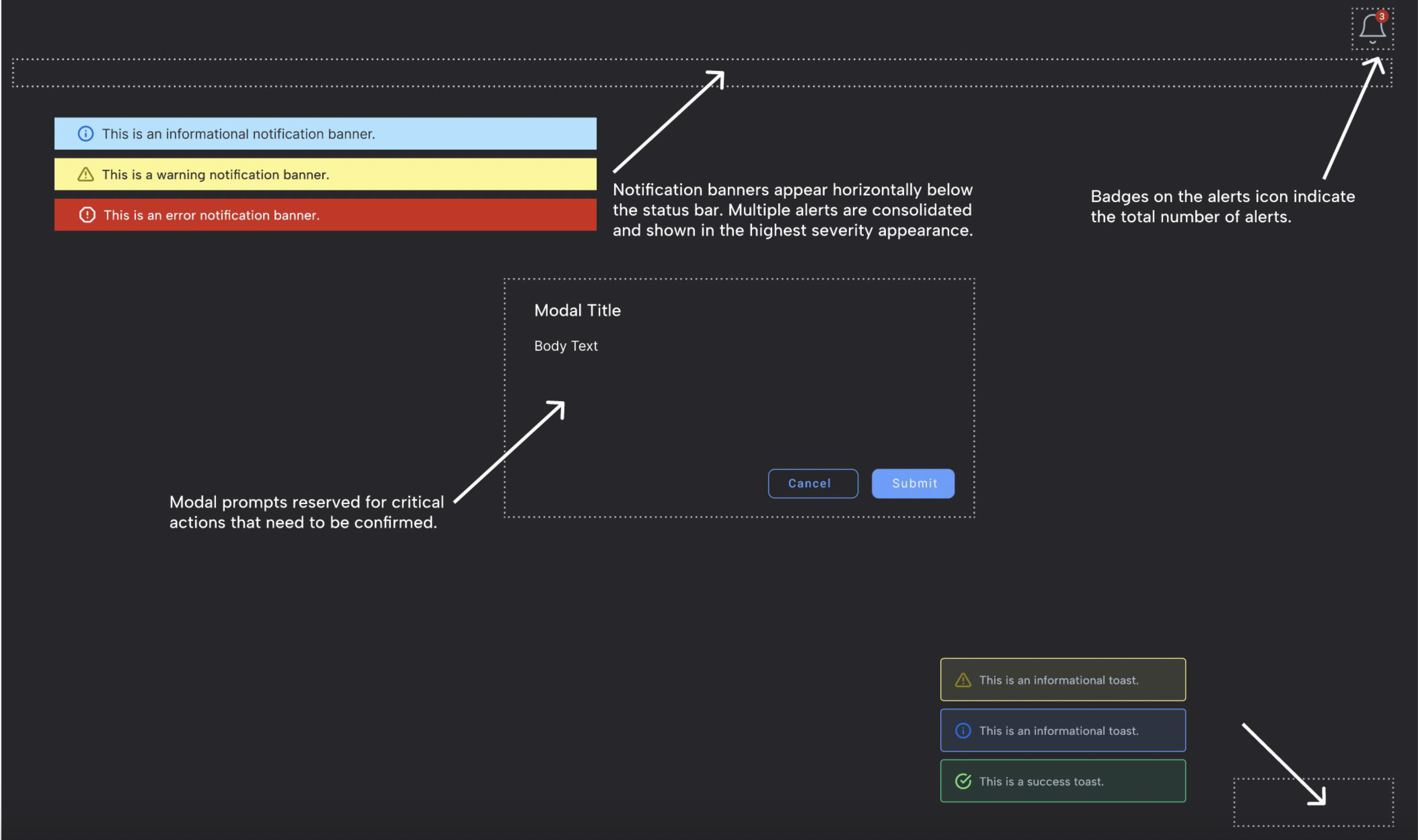
Notification & Alert Patterns
Elements and screen positions were defined for consistent implementation across multiple framework applications  for user prompts, alerts, and action feedback. Since this system involves complex integration of hardware and software systems, prototyping cascading failure scenarios and balancing the level of task interruption during primary mission phases was a key UX priority.
Outcomes
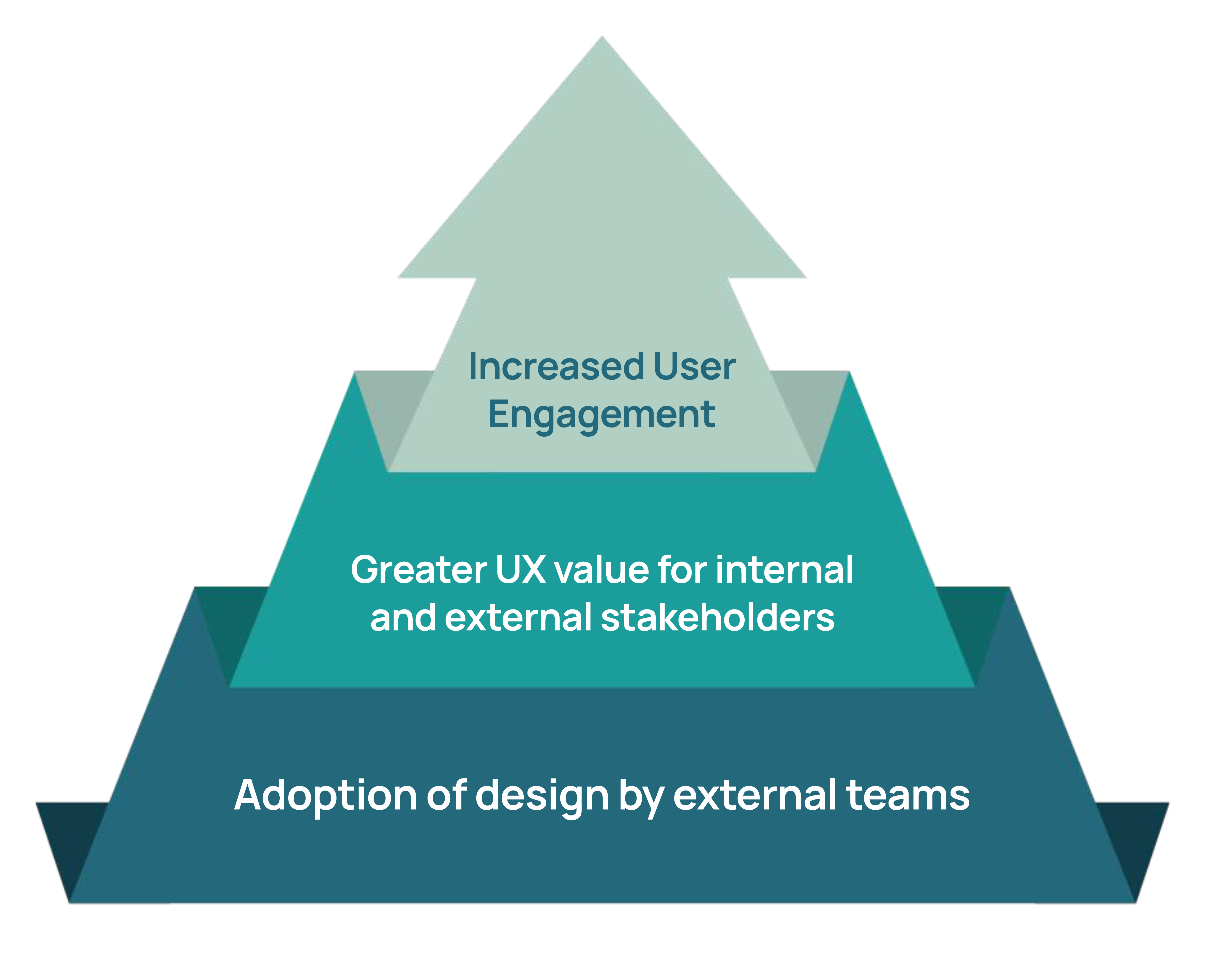
Success with the preliminary application design led to adoption by other projects, which expanded the project scope to develop as a framework.

Usability evaluations were conducted with end-users for the first time in this department, which provided valuable insight for design improvements and shed light on the value of this level of user engagement for future projects.

The UX Process enabled stakeholders and end-users to be involved in the design process more directly.